
Shoulder Dislocation: Recovery Tips | Calgary Sport Therapy
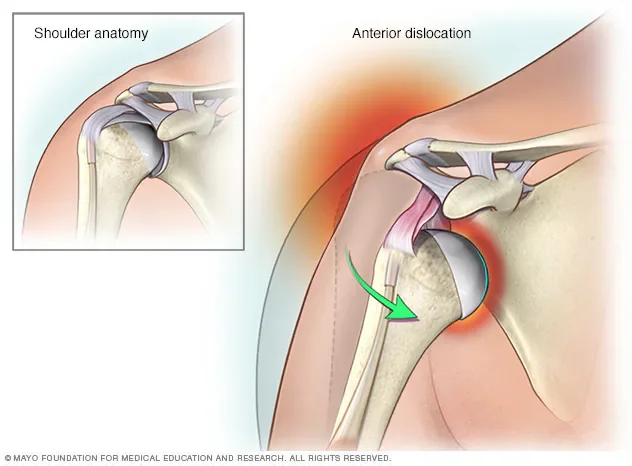
Did you know that the shoulder is the most mobile joint in the body?! Yet it’s also one of the most unstable, as it really relies on the surrounding ligaments and muscles for support. This makes the shoulder more susceptible to instability and with just the wrong type of force at the wrong angle… Dun dun Duuuuun…. dislocation! 😱
If you’re reading this, you probably understand better than anyone else how a shoulder dislocation can be painful and frankly just disruptive to your everyday life. Even the simplest daily tasks can suddenly become impossible. But fear not recovery is absolutely possible!!!
Let us share with you what should be on your radar and what to do to get better after a shoulder dislocation.
What did I damage in my shoulder when it dislocated?
Once a shoulder dislocates things can get damaged, loosey goosey or irritated. This includes:
The Labrum (ring of cartilage that helps stabilize the shoulder and may be responsible for clicking sensation you feel when you move your shoulder)
Shoulder ligaments
Rotator cuff muscles and tendons
Joint capsule
Nerves (eek!)
If you’re not sure what all you injured
At our clinic we have trained specialists that can assess your shoulder, evaluate the different structures of the joint (muscles, joint capsule etc) and provide you with a clear understanding of what may be damaged and whether further imaging (such as MRI or Ultrasound) is needed. If you’re not 100% sure what structures you injured when you dislocated your shoulder, fear not. We can still help.
What to do after a shoulder dislocation
Once the shoulder has been “put back in” ( or “reduced” as we would say), it’s not just about rest like you might think! Recovering from a Shoulder Dislocation is not just about letting the pain subside rather it’s about gradually restoring movement, rebuilding strength and helping the joint feel stable again.
The shoulder joint has up to 10 different directions it needs to move (I know it’s a lot!), making it a complex joint. After a dislocation everything stiffens up and all 10 of those movements need to be restored. The surrounding muscles can weaken, and the connection between the mind and the joint can become impaired or even lost.
This is why it is critical to begin gradual, safe movement at the joint. Rehabbing your shoulder should be all about restoring range of motion, rebuilding strength and stability in the muscles that support the shoulder and waking up the signals in the shoulder joint. This will not only help you regain proper function but will reduce the risk of future instability and or another dislocation.
So please don’t just sit with your arm in a sling and then hope to take it off one day and be all better. Your body deserves an expert that knows what they are doing to get you better as quickly as possible but also to rehab it correctly to prevent another dislocation from happening in the future!
If you’ve suffered a shoulder injury either recently or a long time ago and are interested in our help to get you better. Click the button below to request to Speak with one of our Injury Specialists..